Do the Driving Modes in Cadillac LYRIQ Offer Different Ranges or Battery Usage?
Buying or driving an electric luxury SUV today comes with new questions that never existed before in traditional combustion vehicles. Range anxiety, charging speed, power delivery, motor efficiency, thermal management, regenerative recovery, software intelligence, eco behavior, performance draw, and battery longevity all sit in a shared ecosystem. And inside that ecosystem, driving modes play a fascinating and surprisingly emotional role.
The Cadillac LYRIQ is a prime example of this evolution. The moment you begin exploring what makes a LYRIQ behave like a true luxury EV rather than just another electric car with a premium badge, the conversation inevitability turns to energy. More specifically, how the vehicle uses stored power depending on the mode selected by the driver.
So yes, the short answer is this: the driving modes in Cadillac LYRIQ do influence battery usage, and that influence can reflect noticeable changes in real-world range. It isn’t that the battery suddenly grows or shrinks. It is how intelligently the stored energy is used and how aggressively it is delivered to the drivetrain, screens, steering responsiveness, comfort systems, traction intervention layers, and regeneration availability.
To make sense of this properly, it helps to unpack the question from multiple angles: the engineering logic, the practical impact, the psychology of mode-driven efficiency choices, environmental influence, consumption behavior patterns, software-based torque mapping, regen behavior, temperature management, real-world comparisons, myths vs realities, buyer intent impact, road condition variables, tire pressure influence semantics, and the internal decision-making algorithm families behind each mode.
Understanding What ‘Driving Mode’ Actually Means in an EV
In combustion cars, driving modes usually change timing maps, gear aggression, throttle intensity, suspension firmness, steering weight, and sometimes exhaust tone theatrics. In an electric vehicle like Cadillac LYRIQ, those parameters still exist but they expand into energy consumption architecture:
-
Throttle energy mapping: Adjusts how instantaneously the motors pull from the battery.
-
Regenerative brake intensity: Determines how much energy is recaptured during deceleration.
-
Traction intervention sensitivity: Especially in Snow or All-Wheel configurations, software may redistribute torque or correct slip, consuming extra battery if spin occurs.
-
Acceleration curve shaping: Sport mode often delivers a sharper draw, pulling more kilowatts in shorter bursts.
-
Climate system balancing: Some modes subtly encourage energy-efficient cabin temperature behavior.
-
Motor output allowance: Not all modes allow peak motor draw continuously.
These systems make modes far more meaningful in an EV. They determine battery consumption per mile and therefore influence total travel distance before the next charge.
The Key Driving Modes in Cadillac LYRIQ
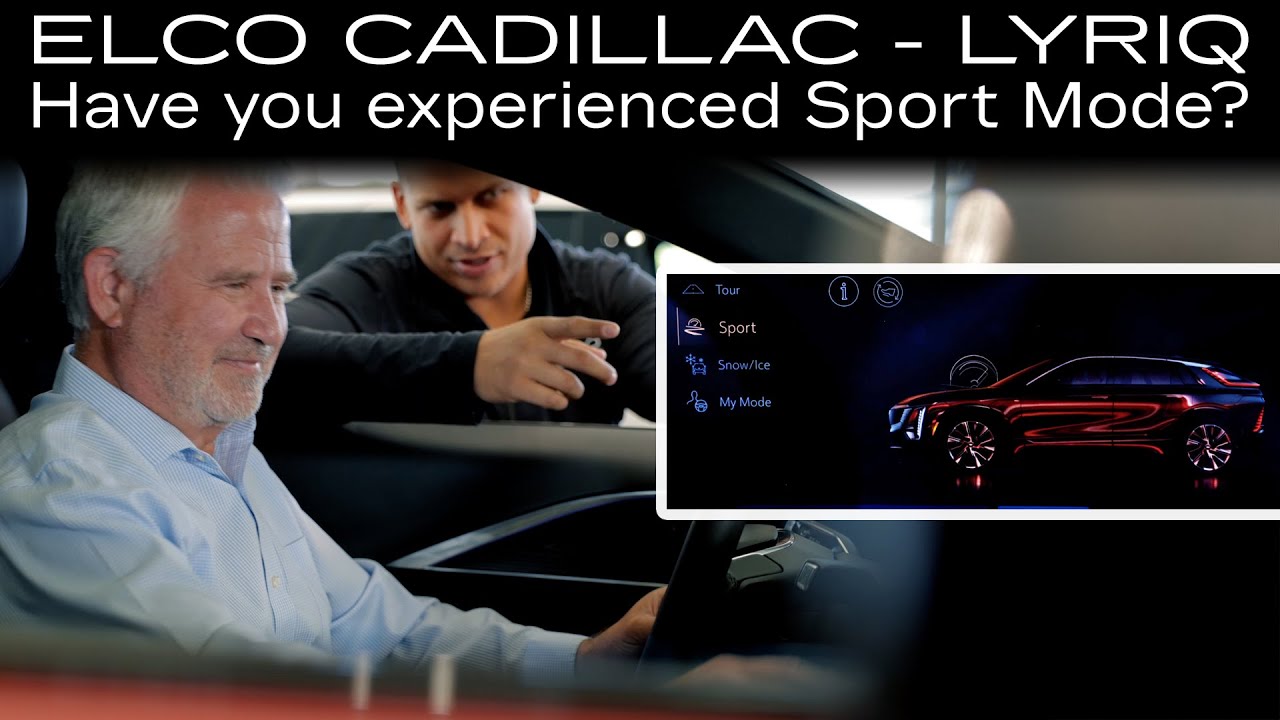
The most commonly referenced modes for Cadillac LYRIQ include:
-
Tour Mode: Balanced, smooth, comfort-focused, typically the default for daily driving.
-
Sport Mode: Performance-forward, fast throttle, more instantaneous power delivery.
-
Snow/Ice Mode: Traction priority for slippery conditions, intelligent torque redistribution, softer acceleration, stability intervention.
-
My Mode: Custom driver profile blending regen, steering, throttle, and comfort parameters.
Each one gives the car a different personality. And personality in an EV equals power expenditure behavior.
How Driving Modes Change Battery Usage and Range
1. Tour Mode (Efficiency and Comfort)
Tour Mode is usually the most energy-conservative mode in the LYRIQ family. It softens power delivery so that acceleration doesn’t spike battery draw unless the driver intentionally floors the throttle. Because EV motors are incredibly efficient at maintaining smooth speed but highly power-hungry during sudden torque bursts, Tour Mode protects the battery by restricting aggressive instant draw.
Tour Mode also prioritizes strong regenerative braking in city or mixed conditions, meaning energy recapture is higher during deceleration. That directly adds usable range because you are returning energy to the battery while slowing down.
Real-world themes from Tour Mode:
-
Gentle acceleration consistency
-
Predictable highway power use
-
Strong regen behavior advantage in urban commutes
-
Climate system uses energy politely instead of aggressively
-
Tire wear influences consumption less due to smoother torque
When driven calmly, Tour Mode often produces the longest usable range because energy is spent predictably and partly recovered whenever possible.
2. Sport Mode (Higher Draw, Lower Range Trade-Off)
Sport Mode explicitly increases throttle responsiveness and offers more continuous motor power access. The car will draw more energy per launch, even if you don’t floor it. Acceleration becomes addictive and effortless, but that addictive ease is what burns range faster. The immediate access to torque encourages frequent bursts of speed, even if unintentional.
Sport Mode also slightly reduces regenerative bias because some owners prefer linear braking feel over strong regen braking deceleration pull. Less regen equals less energy coming back into the battery.
Real-world themes for Sport Mode:
-
5% to 15% range reduction depending on driving habits
-
Higher kW draw in acceleration events
-
Lower recapture through regen braking
-
Increased HVAC load due to dynamic driving personality
-
Higher overall battery usage per mile
Sport Mode isn’t “bad” for the battery, but it absolutely results in higher stored energy consumption, and therefore less miles per charge than Tour Mode.
3. Snow/Ice Mode (Traction vs Efficiency Balance)
Snow Mode restricts throttle aggression even more than Tour Mode, but because it increases traction control intervention, some energy is spent managing stability rather than propulsion. However, the mode prevents wheel-spin waste, which means although Snow Mode can reduce range a few percent, it also protects the battery from inefficient spin acceleration waste.
Themes from Snow/Ice Mode:
-
Slight efficiency reduction vs Tour Mode, but safer energy logic
-
No risk acceleration spikes
-
Better torque distribution preventing slip energy waste
-
Regen maintained modestly strong to recover deceleration energy
Snow Mode is range-gentle not because it is purely efficient, but because it avoids chaotic waste.
4. My Mode (Custom Battery Personality Profiling)
My Mode is where buyers feel most in control. You can shape throttle to behave softly like Tour, keep regeneration strong, slightly increase steering firmness without stressing motors, and maintain climate energy use wisely.
Depending on configuration, My Mode can:
-
Match Tour Mode efficiency almost exactly
-
Mirror Sport behavior if set aggressively
-
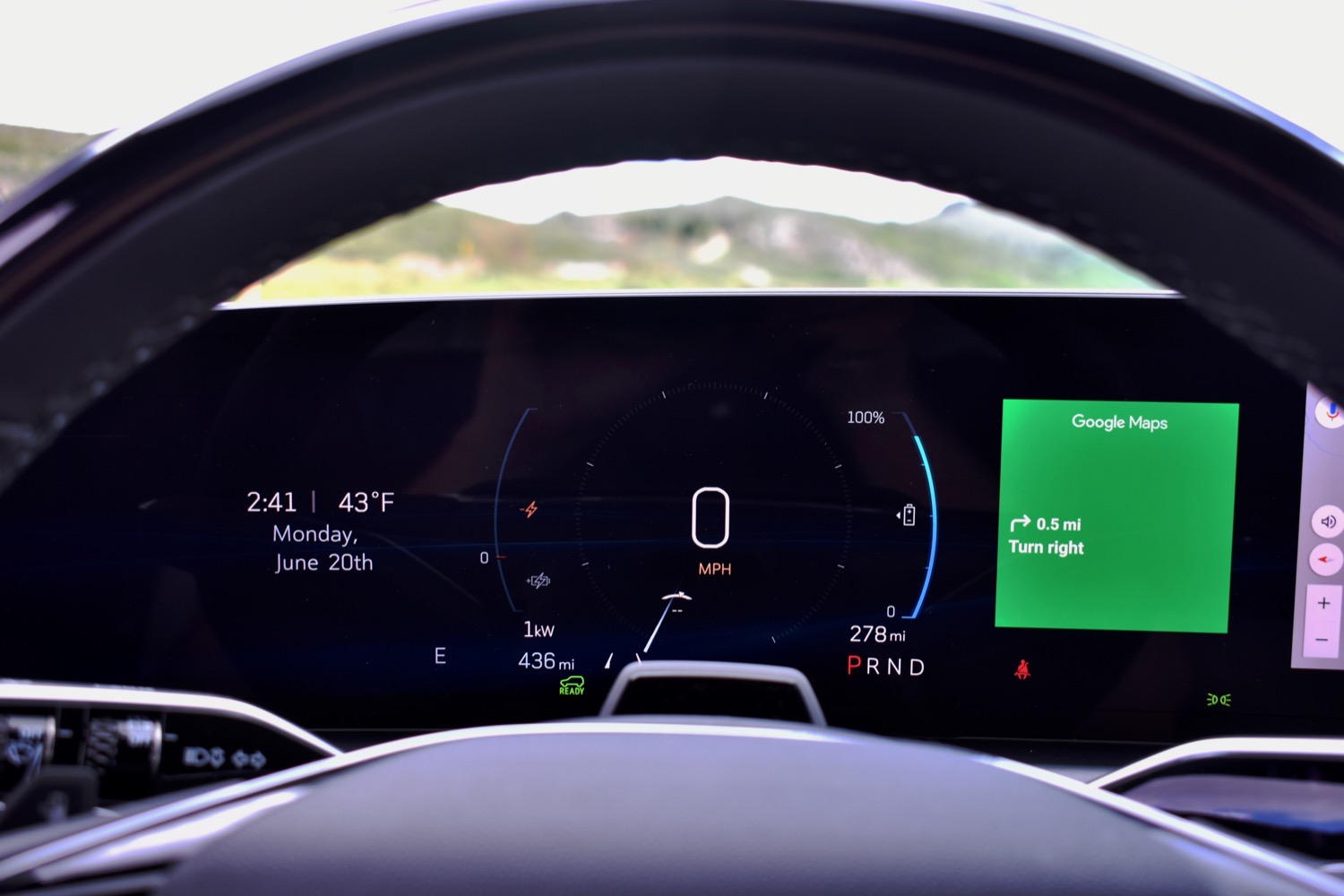
Land anywhere between 280–320+ miles real-world based on settings
This mode is essentially a psychological and tactical negotiation between performance and range.
Real-World Scenarios That Change Range More Than Modes Alone
Driving modes influence battery usage, but other real-world factors influence range more heavily:
Speed
In any EV, aerodynamic drag increases dramatically above 65 mph. At 80 mph, the motor will draw nearly 20–30% more power than at 65 mph, regardless of mode.
At:
-
65 mph, LYRIQ remains efficient and calm
-
80 mph, battery consumption climbs fast
-
90 mph, HVAC and motor draw increases further, draining range noticeably
Cabin Temperature and HVAC Load
Electric heating and air conditioning pull directly from the battery. Cold climates especially can reduce overall range by 10% to 20%.
Tire Pressure
Under-inflated tires increase rolling resistance, making motors pull more battery draw to maintain speed.
Even a 3 PSI drop below recommended pressure can reduce range by 2-4%.
Terrain
Uphill travel drains battery faster than flat roads. Regen downhill may recover some energy, but uphill draw is stronger than downhill recapture.
Cargo Weight
Heavier load reduces efficiency. Defenders 110/130 buyers may sense this more than compact 90 buyers due to space usage philosophy.
Common Myths vs Actual Truths
| Myth | Reality |
|---|---|
| Sport mode damages the battery | No, it consumes energy faster, but doesn’t inherently damage the battery when used normally |
| Snow mode always reduces range heavily | Slight reduction due to traction control, but often prevents more waste than it spends |
| Driving mode changes the battery capacity | No, it changes motor draw behavior and regen recapture logic |
| Only ECO modes matter for range | ECO helps, but speed, terrain, HVAC, and tire pressure often influence range more heavily |
| Regen braking alone gives massive range guarantees | Regen recovers energy, but it cannot fully offset inefficient acceleration spikes |
Modes are part of efficiency equation, not the entire equation.
How Much Range Difference Should Buyers Expect Without Stress?
Most practical owner observations cluster this insight:
-
Tour Mode gives the longest range per charge if driven gently
-
Sport Mode reduces range 5–15% depending on driving habits
-
Snow/Ice Mode may reduce range 2–6%, but protects against bigger waste
-
My Mode can match Tour efficiency if configured for smooth throttle + strong regen + polite climate use
Buyers should expect a range buffer mindset, not engineer perfection expectations.
Final Conclusion
Yes, Cadillac LYRIQ driving modes influence battery usage, which can affect real-world range. But the influence isn’t magic. It is logical, predictable, and comes down mostly to how the motors draw power and how regen recovery returns it.
Tour Mode is the most efficient in most normal conditions and delivers the longest range when acceleration stays smooth and predictable. Sport Mode increases motor power access and throttle response, which leads to higher kW draw and typically lower range per charge, especially if driven enthusiastically or at high speeds. Snow/Ice Mode may use a bit more battery for stability management, but it also prevents slip and spin waste, meaning the net range impact is often minimal and more safety-beneficial than wasteful. My Mode gives owners the ability to architect their own efficiency personality, landing anywhere between Tour-like calm efficiency and Sport-like acceleration energy appetite.